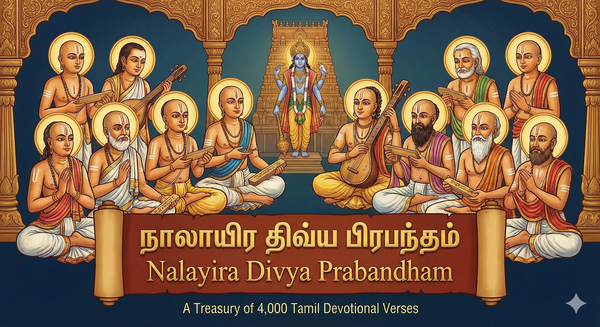
4000 divya Prabandham
Periyāzhvār Tirumozhi — Periyāzhvār (Pāsurams 131–140)
Periyāzhvār Tirumozhi — Periyāzhvār (Pāsurams 131–140)

4000 divya Prabandham
Periyāzhvār Tirumozhi — Periyāzhvār (Pāsurams 131–140)
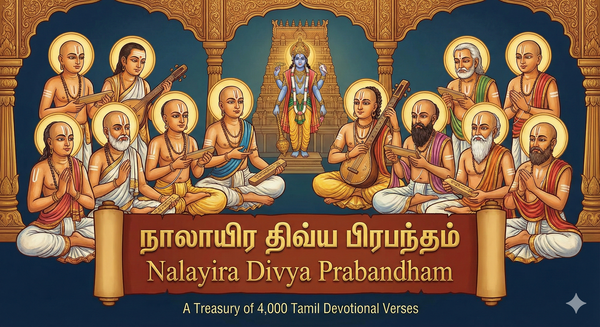
Divya Prabandham
Periyāzhvār Tirumozhi — Periyāzhvār (Pāsurams 121–130)
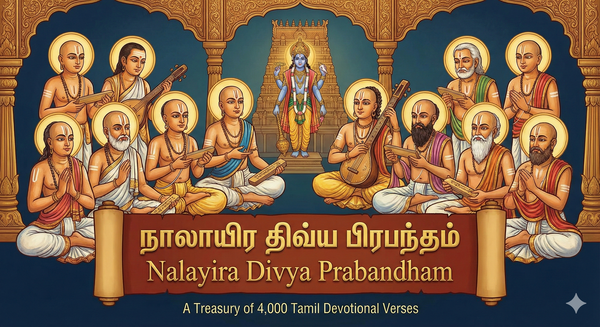
Divya Prabandham
These ten pāsurams sustain Periyāzhvār’s lamp of love as steady companionship. Devotion here is no longer an event or surge—it is an abiding presence, calm and deeply rooted.
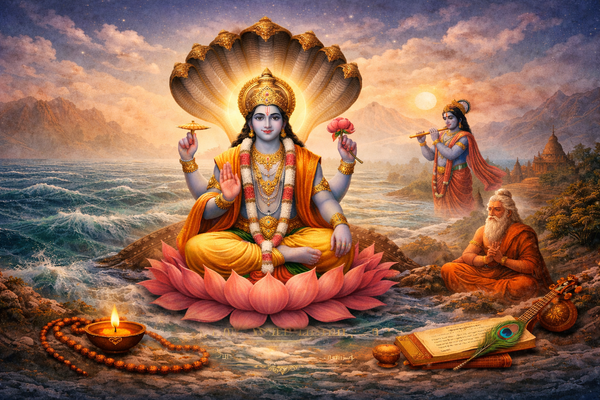
vishnu Sahasranamam
This opening verse establishes the scale of the Divine. It moves from the vastness of the entire "Universe" (Visvam) to the intimate reality that He is the "Soul" (Bhutatma) within us.
Divya Prabandham
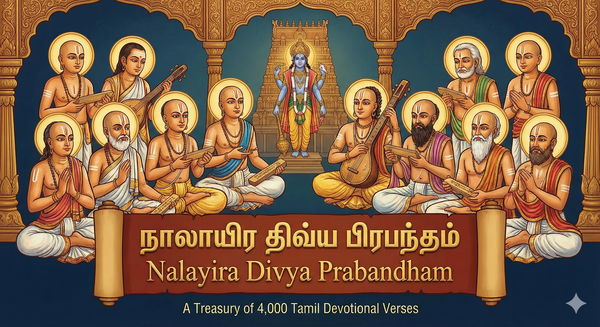
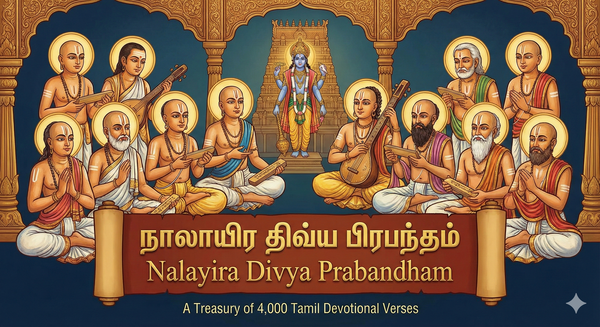
These ten pāsurams carry Periyāzhvār’s lamp of love forward with the same calm assurance. The affection that began as blessing now lives as steady companionship—unwavering, gentle, and deeply human.
Divya Prabandham
Periyāzhvār Tirumozhi — Periyāzhvār (Pāsurams 91–100)
Divya Prabandham
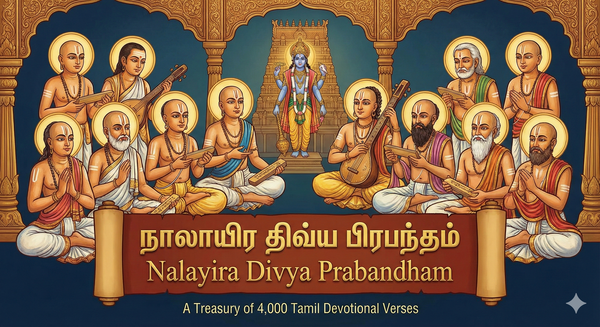
Periyāzhvār opens this set by naming love as stability. 4000 Divya Prabandham.
vishnu Sahasranamam
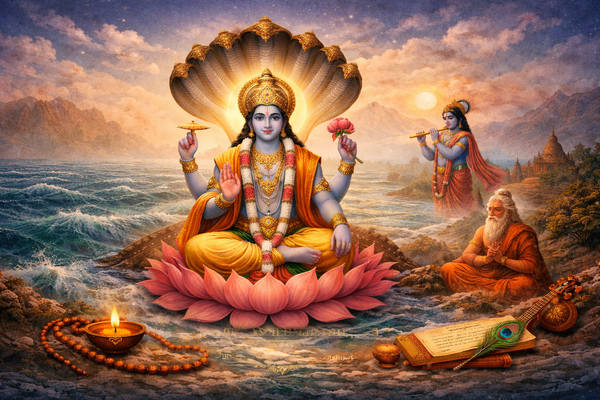
The Invocation (Dhyana Slokam) Sanskrit,Vishnu Sahasranamam Before we begin any great task—like reciting a thousand names—we must first still the mind. This verse acts as a "spiritual reset," clearing the mental clutter and preparing us to receive the divine vibration.
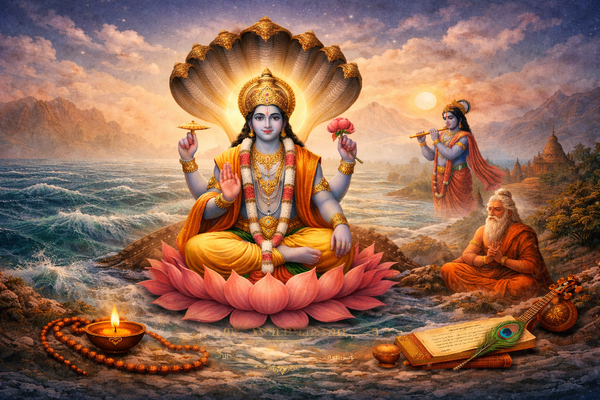
vishnu Sahasranamam
This hymn is not merely a list of names; it is a "Stotra" with an impeccable pedigree. Bequeathed by Sage Vyasa, the compiler of the Vedas, it was first recited by Bhishma Pitamaha in the presence of Lord Krishna himself.